

Who Can Benefit from Ketamine-Assisted Psychotherapy (KAP)?
Ketamine-Assisted Psychotherapy (KAP) may be considered for individuals seeking support for certain mental health conditions, especially when traditional approaches have not provided the desired level of improvement. This therapy combines ketamine treatment with psychotherapy to help patients explore thoughts, emotions, and personal experiences in a supportive clinical setting. Individuals experiencing challenges such as depression, anxiety, trauma-related concerns, or emotional distress may discuss whether KAP is an appropriate option with a qualified mental health professional. At Bay Area Ketamine Center, Dr. Paul Wender, MD provides personalized evaluations to understand each individual’s mental health needs, treatment goals, and overall wellness considerations. Patients receive a thoughtful approach that focuses on creating a safe environment for exploring ketamine-assisted psychotherapy and its potential role in a comprehensive mental health care plan. For more information, contact us today or schedule an appointment online. Our clinic is conveniently located at 746 Altos Oaks Drive Suite B, Los Altos, CA 94024.
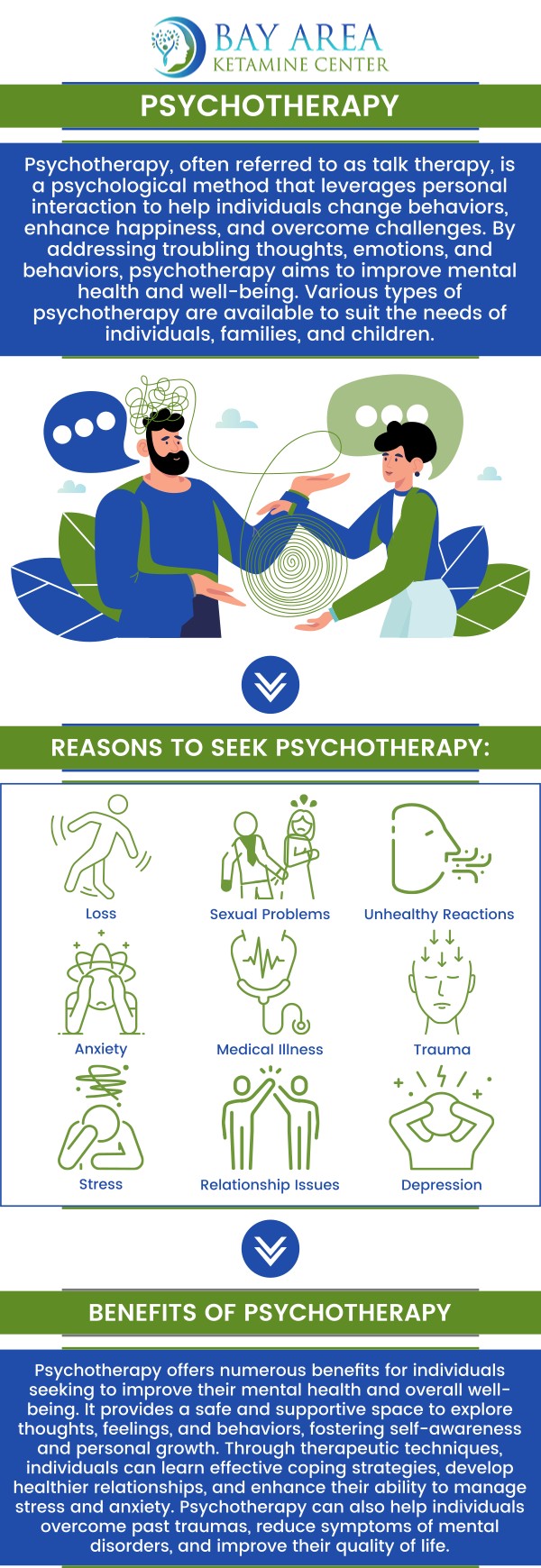
Table of Contents:
What are the long-term benefits of Ketamine Assisted Psychotherapy?
Can Ketamine Assisted Psychotherapy help with treatment-resistant depression?
Is Ketamine Assisted Psychotherapy effective for anxiety disorders?
How quickly will I see results from Ketamine Assisted Psychotherapy?
Can Ketamine-Assisted Psychotherapy be used alongside other treatments?
What makes Dr. Paul Wender, MD, a trusted choice for ketamine-assisted psychotherapy (KAP) at Bay Area Ketamine Center Serving Bay Area, Los Altos, CA?
The long-term benefits of ketamine-assisted psychotherapy can vary depending on each individual’s mental health history, treatment goals, and response to care. By combining ketamine treatment with psychotherapy, this approach may help some individuals continue working through emotional challenges, develop greater self-awareness, and build healthier ways of understanding their thoughts and experiences. The therapeutic process focuses on supporting meaningful progress over time rather than providing a temporary solution.
Some individuals may experience improvements in areas such as emotional processing, coping strategies, and the ability to approach difficult thoughts or experiences with a new perspective. Ongoing therapy, healthy lifestyle habits, and continued mental health support can play an important role in maintaining progress after treatment. Because each person responds differently, long-term outcomes depend on personalized care and individual circumstances.
At Bay Area Ketamine Center, Dr. Paul Wender, MD, provides personalized evaluations and medically supervised ketamine-assisted psychotherapy based on each patient’s unique needs and goals. Our team focuses on creating an individualized treatment plan while providing guidance throughout the care process. Through thoughtful support and ongoing monitoring, Dr. Paul Wender, MD, and the team at Bay Area Ketamine Center help patients understand their treatment experience and work toward their long-term mental health goals.
Ketamine-assisted psychotherapy may be considered as a treatment option for individuals experiencing treatment-resistant depression, particularly when traditional approaches have not provided the level of improvement they were hoping for. This approach combines ketamine treatment with therapeutic support, allowing patients to work through emotions, thoughts, and experiences in a structured setting. Ketamine may influence certain brain pathways involved in mood regulation and emotional processing, which can create an opportunity for patients to engage more openly in therapy.
Treatment-resistant depression can affect each person differently, and the appropriate treatment approach depends on individual symptoms, health history, and previous treatment experiences. Ketamine-assisted psychotherapy is not suitable for everyone, but a comprehensive evaluation with a qualified medical professional can help determine whether it may be an appropriate option. Ongoing therapy and personalized support are important components of achieving meaningful mental health progress.
At Bay Area Ketamine Center, Dr. Paul Wender, MD, provides personalized evaluations for individuals considering ketamine-assisted psychotherapy for treatment-resistant depression. Our team focuses on medically supervised care, individualized treatment planning, and patient education to help individuals understand their options. Through compassionate guidance and structured support, Dr. Paul Wender, MD, and the team at Bay Area Ketamine Center help patients explore whether ketamine-assisted psychotherapy may align with their mental health goals.
KAP is a combined therapeutic approach that uses the drug ketamine along with psychotherapy. Ketamine works by targeting the NMDA receptors in the brain, which are critical in regulating mood and cognition. By blocking these receptors, ketamine can help reset neural pathways that have become dysfunctional in anxiety disorders.
During the “window of opportunity” created by ketamine, psychotherapy can be more effective, enabling individuals to address and process traumatic or distressing experiences contributing to their anxiety.
While the exact mechanisms resulting in the long-term benefits of KAP are not fully understood, they may be related to increased neuroplasticity, improved stress response regulation, and reduced brain inflammation.
The timeline for results from KAP can vary significantly among individuals. It’s influenced by factors such as symptom severity, individual physiology, and ketamine dosage and frequency.
We remind patients that each person’s body responds differently to treatment, and no two experiences are exactly alike. Some patients may notice immediate relief after their initial KAP session, but this isn’t always the case. Most patients typically start to see a significant improvement in their symptoms after two to three weeks of regular sessions, but it can take up to six weeks or more for others to see a noticeable change.
The benefits of KAP often unfold gradually and cumulatively, building up over time, and the real benefits often come from the work done in psychotherapy sessions in conjunction with the ketamine treatment. It’s therefore crucial to continue with your treatment plan even if you don’t see immediate results.
At the Bay Area Ketamine Center, we can also combine KAP with various holistic therapy forms, such as mindfulness meditation, yoga, exercise, and other relaxation techniques. These complementary approaches support mental well-being by reducing stress, improving mood, and enhancing cognitive function. The combination of KAP and lifestyle interventions can create a synergistic effect, promoting long-term health, overall well-being, and recovery.
We use KAP as a complement to traditional psychotherapy. The unique physiological state induced by ketamine during KAP sessions enhances the therapeutic process and facilitates a deeper exploration of psychological issues. This allows patients to gain new insights and perspectives that can be further discussed during regular therapy sessions. Additionally, ketamine promotes neuroplasticity, which aids in forming new neural connections and breaking down maladaptive patterns. This increased flexibility can make psychotherapy more effective by enhancing communication between brain regions involved in emotional regulation and self-reflection.
KAP can interact with other medications that are used to treat mental health disorders. For instance, KAP can be used with certain medications, especially antidepressants, where it has been shown to enhance the efficacy of SSRIs and MAOIs. The combination of KAP and medication provides a more comprehensive approach, targeting multiple neurochemical systems involved in mood regulation. Careful monitoring and adjustment of medication regimes may be necessary when introducing ketamine into the treatment plan.
Board-certified Dr. Paul Wender, MD, is a trusted choice for ketamine-assisted psychotherapy (KAP) because he brings a physician-guided, patient-centered approach to mental health care at Bay Area Ketamine Center, serving the Bay Area, Los Altos, CA. He takes time to understand each patient’s symptoms, treatment history, emotional concerns, and personal goals before determining whether KAP may be an appropriate option.
With a focus on safety, comfort, and individualized care, Dr. Wender helps patients feel supported throughout the KAP process. His approach combines medical expertise with compassionate guidance, giving patients a thoughtful treatment experience designed to support emotional healing, improved self-awareness, and better quality of life. For more information, contact us today or schedule an appointment online. Our clinic is conveniently located at 746 Altos Oaks Drive Suite B, Los Altos, CA 94024. We serve patients from Los Altos CA, Sunnyvale CA, Palo Alto CA, Atherton CA, Cupertino CA, Santa Clara CA, Mountain View CA, the Bay Area, and surrounding areas.

Check Out Our 5 Star Reviews




 Send Text
 How May I Help You?