

How Can Ketamine Help With Bipolar Disorder Treatment in Los Altos, CA?
Ketamine is being explored as a potential treatment for bipolar disorder, particularly for managing acute depressive episodes. Bay Area Ketamine Center offers ketamine therapy support for bipolar disorder treatment in Los Altos, CA, serving patients throughout the Bay Area. Under the guidance of Dr. Paul Wender, MD, care begins with a thoughtful evaluation to determine whether ketamine may be appropriate based on each patient’s diagnosis, mood history, medications, and treatment goals. With close medical supervision, patients receive personalized care in a calm setting designed to support emotional wellness, safety, and long-term treatment progress. Contact us today for more information or visit us to schedule an appointment online. Our clinic is conveniently located at 746 Altos Oaks Drive Suite B, Los Altos, CA 94024.
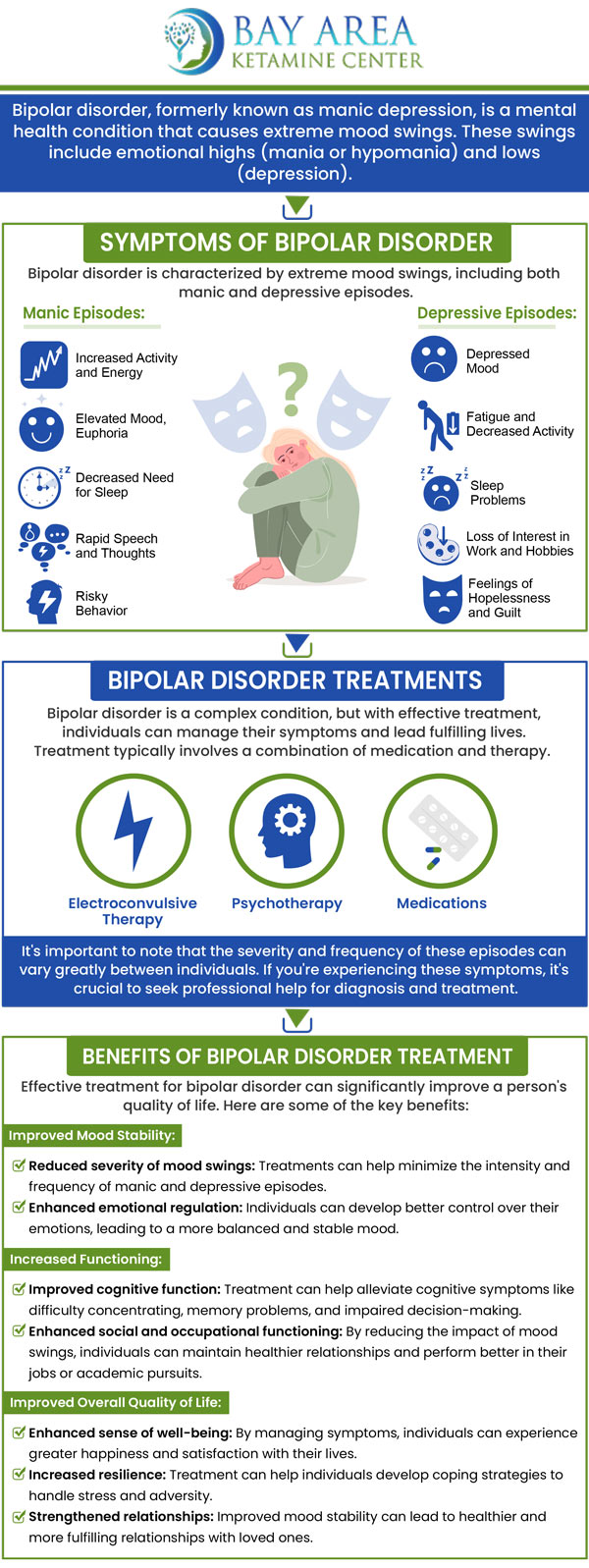
Table of Contents:
What is bipolar disorder?
Who should use ketamine treatments?
Can bipolar disorder be cured?
Bipolar disorder is a mental health condition characterized by significant changes in mood, energy, activity levels, and concentration. These shifts can include depressive episodes marked by sadness, low energy, reduced motivation, or loss of interest, as well as manic or hypomanic episodes involving elevated mood, increased energy, decreased need for sleep, rapid thoughts, impulsivity, or irritability. The pattern, intensity, and duration of these episodes can vary from person to person, which is why professional evaluation is important for accurate diagnosis and treatment planning.
Bipolar disorder is a mental health condition that causes a person to experience extreme mood swings, cycling through periods of euphoria and depression. While it is normal for everyone to experience emotional states of highs and lows, for people with bipolar disorder, the mood swings are often more extreme. Bipolar disorder typically consists of three states:
• Mania, a high state, with raised levels of energy
• Depression, a low state, with lowered levels of energy and mood
• Intermediate, a well state, with normal levels of energy and function
Signs and symptoms of both manic and depressive states, including the following:
Manic
• Exaggerated self-esteem or feelings of grandeur
• Decreased need for sleep
• More talkative than usual
• Racing thoughts
• Easily distracted
• Excessive energy for activities
• Engaging in risky behavior or exhibiting poor judgment
Depressive
• Depressed mood
• Loss of interest in activities that used to bring feelings of joy or pleasure
• Weight loss or gain
• Difficulty sleeping or oversleeping
• Apathy or agitation
• Loss of energy
• Feelings of hopelessness, worthlessness, shame, or guilt
• Inability to concentrate
• Suicidal thoughts (should be handled seriously)
Ketamine treatments for bipolar disorder are suitable for patients who have struggled to find relief from other therapies. Research has shown that therapeutic ketamine treatments can help patients feel less depressed and experience fewer emotional outbursts. It has also been proven effective in reducing suicidal thoughts and night terrors.
However, as is always the case, results vary from patient to patient. Ketamine treatments may not be the right choice for every individual and should be evaluated by a medical professional before treatment. Typical side effects with ketamine treatments include nausea, loss of appetite, and visual or auditory distortions.
Bipolar disorder is a lifelong (chronic) condition. Although there is currently no known cure for bipolar disorder, with the appropriate treatment plan, symptoms can be effectively managed, allowing people with the disorder to live a good quality of life. People who receive treatment for bipolar disorder can better manage their condition, experiencing fewer symptoms and less intense mood swings. Alternative treatments have proven to be highly effective in managing bipolar disorder, particularly with the use of ketamine. This substance works to reduce symptoms by altering the brain’s chemical composition, promoting proper imbalances. In addition to pharmacological treatments, lifestyle changes are often implemented to help minimize symptoms and reduce or avoid triggers.
If you or someone you know is struggling with bipolar disorder and has not seen promising results from traditional therapies, ketamine treatments may be able to provide you with relief. The kind and compassionate professionals at Bay Area Ketamine Center are experienced in ketamine treatments and can help you better manage your condition.
Ketamine therapy may carry a risk of triggering manic or hypomanic symptoms in some people with bipolar disorder, although this appears to be uncommon. Because bipolar disorder involves shifts between depressive and elevated mood states, patients should be carefully evaluated before treatment. A history of mania, hypomania, rapid mood changes, medication use, and other psychiatric factors can help determine whether ketamine therapy may be appropriate.
Patients should report symptoms such as unusually elevated mood, decreased need for sleep, increased energy, racing thoughts, impulsive behavior, or significant irritability after treatment. Close medical supervision allows the clinical team to identify concerning changes early and decide whether treatment should be adjusted, paused, or coordinated with the patient’s existing mental health care.
Mood changes can be monitored through regular clinical assessments before, during, and between ketamine therapy sessions. The care team may review depressive symptoms, energy levels, sleep patterns, anxiety, motivation, and any signs of mood elevation. Patients are also encouraged to report changes in behavior, thinking, sleep, or emotional stability that occur after an infusion.
Ongoing communication is especially important for patients with bipolar disorder because treatment response can vary over time. Tracking symptoms between sessions can help the clinical team identify improvement as well as possible signs of mania or hypomania. This information supports safer, more individualized decisions about whether IV ketamine therapy should continue or whether the treatment plan needs to be modified.
At Bay Area Ketamine Center serving the Bay Area, Los Altos, CA, board-certified Dr. Paul Wender, MD, provides compassionate, physician-guided ketamine care for eligible patients exploring treatment options related to bipolar disorder symptoms. Dr. Wender takes a careful, personalized approach, reviewing each patient’s diagnosis, mood history, current medications, previous therapies, and overall mental health needs before recommending care. Because bipolar disorder can involve complex mood changes, his evaluation focuses on safety, appropriateness, and individualized planning. This doctor-led process helps patients feel heard, informed, and supported as they consider whether ketamine therapy may fit into their broader treatment plan.
Under the guidance of Dr. Paul Wender, MD, patients receive attentive monitoring and clear communication throughout their care experience. His approach emphasizes comfort, education, and clinical oversight, helping patients understand what to expect before, during, and after treatment. For patients who have not found enough relief through traditional options, ketamine therapy may offer support for emotional distress, mood-related challenges, and daily functioning when carefully recommended by an experienced physician. At Bay Area Ketamine Center, Dr. Wender’s compassionate care is designed to help patients feel more confident, respected, and supported as they explore advanced mental health treatment in a safe, professional setting.
Contact us today for more information or visit us to schedule an appointment online. Our clinic is conveniently located at 746 Altos Oaks Drive Suite B, Los Altos, CA 94024. We serve patients from Los Altos CA, Sunnyvale CA, Palo Alto CA, Atherton CA, Cupertino CA, Santa Clara CA, Mountain View CA, the Bay Area, and surrounding areas.

Check Out Our 5 Star Reviews




 Send Text
 How May I Help You?