

Ketamine for Treatment-Resistant Depression in Los Altos, CA
Ketamine for Treatment-Resistant Depression is a specialized treatment approach for individuals who continue to experience depressive symptoms despite previous treatment efforts. This therapy involves a personalized evaluation to understand each person’s mental health history, symptoms, and treatment goals. Ketamine care is provided through a structured clinical process designed to support individuals seeking additional options for managing persistent depression concerns. At Bay Area Ketamine Center, Dr. Paul Wender, MD, provides individualized consultations and ketamine treatment plans tailored to each patient’s needs. Our team focuses on delivering thoughtful guidance, careful assessment, and a supportive treatment experience for individuals exploring options for treatment-resistant depression. Contact us today for more information or schedule an appointment online. We are conveniently located at 746 Altos Oaks Drive Suite B, Los Altos, CA 94024.
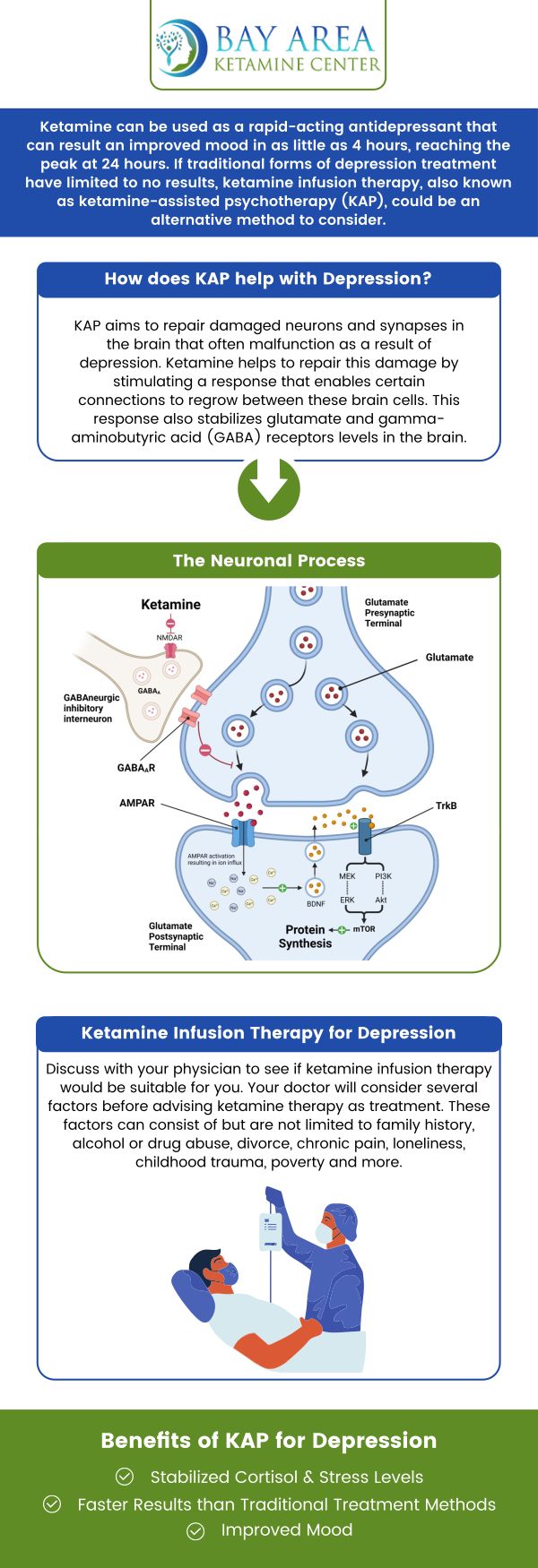
Table of Contents:
What is treatment-resistant depression?
What causes treatment-resistant depression?
Who is at risk for treatment-resistant depression?
How does ketamine work for treatment-resistant depression?
Treatment-resistant depression (TRD) refers to depression that does not improve sufficiently after trying at least two antidepressant treatments. It does not mean that depression cannot be treated. Rather, it may indicate that a person needs a different treatment strategy or a more individualized evaluation. Symptoms can continue to affect mood, motivation, sleep, concentration, relationships, and daily functioning despite previous treatment efforts.
Treatment for TRD may involve adjusting medications, combining treatments, psychotherapy, or considering other options based on a person’s medical and mental health history. Ketamine has been studied for its rapid antidepressant effects, while esketamine nasal spray is FDA-approved for treatment-resistant depression. Intravenous ketamine may be used off-label under appropriate medical supervision, and the suitability of any ketamine-based treatment depends on an individual evaluation.
At Bay Area Ketamine Center, Dr. Paul Wender, MD, evaluates patients with treatment-resistant depression by considering their symptoms, previous treatment experiences, health history, and individual treatment goals. Our team provides medically supervised care and personalized treatment planning for patients considering ketamine therapy as an additional option after other approaches have not provided sufficient relief.
Treatment-resistant depression does not have one specific cause. Depression can develop through a combination of biological, psychological, environmental, and genetic factors, and these same factors may influence how a person responds to treatment. Differences in brain signaling, chronic stress, trauma, sleep problems, substance use, and other mental health or physical health concerns may contribute to persistent depressive symptoms.
Treatment-resistant depression may also occur when an individual does not experience sufficient improvement after appropriate treatment attempts. Factors such as the type and severity of depression, coexisting conditions, treatment adherence, individual biology, and the duration of symptoms can influence treatment response. In some cases, an initial diagnosis may also need to be reassessed when symptoms do not improve as expected.
At Bay Area Ketamine Center, Dr. Paul Wender, MD, considers each patient’s symptoms, treatment history, health background, and individual goals when evaluating treatment-resistant depression. Our team provides personalized assessments to help determine whether ketamine therapy may be an appropriate treatment option for patients who have not experienced sufficient improvement with previous approaches.
Certain factors may increase the likelihood that depression will persist despite treatment, although they do not mean a person will necessarily develop treatment-resistant depression. Individuals with more severe or long-lasting depressive symptoms, recurrent episodes, an early onset of depression, or coexisting mental health concerns may have a greater chance of experiencing an incomplete response to standard treatments. A family history of depression and certain biological factors may also influence how someone responds to treatment.
Other circumstances can make depression more difficult to manage. Chronic stress, trauma, substance use, sleep difficulties, and certain medical conditions may contribute to persistent symptoms or complicate treatment. Treatment-related factors, including an inadequate treatment duration, medication side effects, difficulty following a treatment plan, or limited response to previously prescribed therapies, can also affect outcomes. A comprehensive evaluation can help distinguish treatment resistance from other factors that may be interfering with improvement.
At Bay Area Ketamine Center, Dr. Paul Wender, MD, evaluates each patient’s symptoms, treatment history, health background, and individual goals when assessing treatment-resistant depression. Our team considers previous treatment responses and other relevant factors to help determine whether ketamine therapy may be an appropriate option. This personalized approach supports a treatment plan based on each patient’s individual circumstances and mental health needs.
Ketamine works differently from many traditional antidepressants and may provide a different treatment approach for people with treatment-resistant depression. It primarily affects the brain’s glutamate system by blocking certain NMDA receptors, which can influence communication between nerve cells. This activity may increase signaling through other pathways involved in mood regulation and support changes in neural connections. Some patients may experience improvements in depressive symptoms relatively quickly, although individual responses can vary.
Ketamine treatment is not appropriate for everyone, and its potential benefits depend on factors such as a person’s symptoms, medical history, previous treatment experiences, and overall health. Treatment should be provided under appropriate medical supervision, with patients monitored during and after administration. Ketamine may be considered as part of a broader treatment plan rather than as a replacement for comprehensive mental health care.
At Bay Area Ketamine Center, Dr. Paul Wender, MD, evaluates patients with treatment-resistant depression to determine whether ketamine therapy may be an appropriate option based on their individual circumstances and treatment history. Our team provides medically supervised care and personalized treatment planning, with attention to patient comfort, safety, and treatment response throughout the process.
At Bay Area Ketamine Center serving the Bay Area and Los Altos, CA, board-certified Dr. Paul Wender, MD, offers ketamine treatment for depression with a thoughtful, medically guided approach. He takes time to learn about each patient’s depression symptoms, emotional challenges, health background, past treatment experiences, and current medications before recommending care. This allows Dr. Wender to better understand the patient’s needs and determine whether ketamine therapy may be a suitable option.
Dr. Wender’s care is focused on patient comfort, safety, and individualized support throughout the treatment journey. He helps patients know what to expect, answers questions clearly, and provides close supervision during the process. For patients who have continued to struggle despite traditional depression treatments, ketamine therapy may offer additional support for mood, motivation, emotional wellness, and daily functioning. His doctor-led approach helps patients feel more confident, informed, and supported while exploring advanced depression care.
Get specialized and quality care at Bay Area Ketamine Center. Contact us today to learn more about the services we offer. We are conveniently located at 746 Altos Oaks Drive Suite B, Los Altos, CA 94024. We serve patients from Los Altos CA, Sunnyvale CA, Palo Alto CA, Atherton CA, Cupertino CA, Santa Clara CA, Mountain View CA, the Bay Area, and surrounding areas.

Check Out Our 5 Star Reviews




 Send Text
 How May I Help You?