

Everything You Need To Know About Addiction
Addiction is a complex medical and behavioral condition that can affect the brain, emotions, relationships, and daily life. At Bay Area Ketamine Center, board-certified Dr. Paul Wender, MD, helps patients understand that addiction is not simply a lack of willpower; it often involves changes in cravings, decision-making, stress response, and coping patterns. People may struggle with substances, behaviors, or repeated habits even when they want to stop. Contact us today for more information or schedule an appointment online. Our clinic is conveniently located at 746 Altos Oaks Drive Suite B, Los Altos, CA 94024.
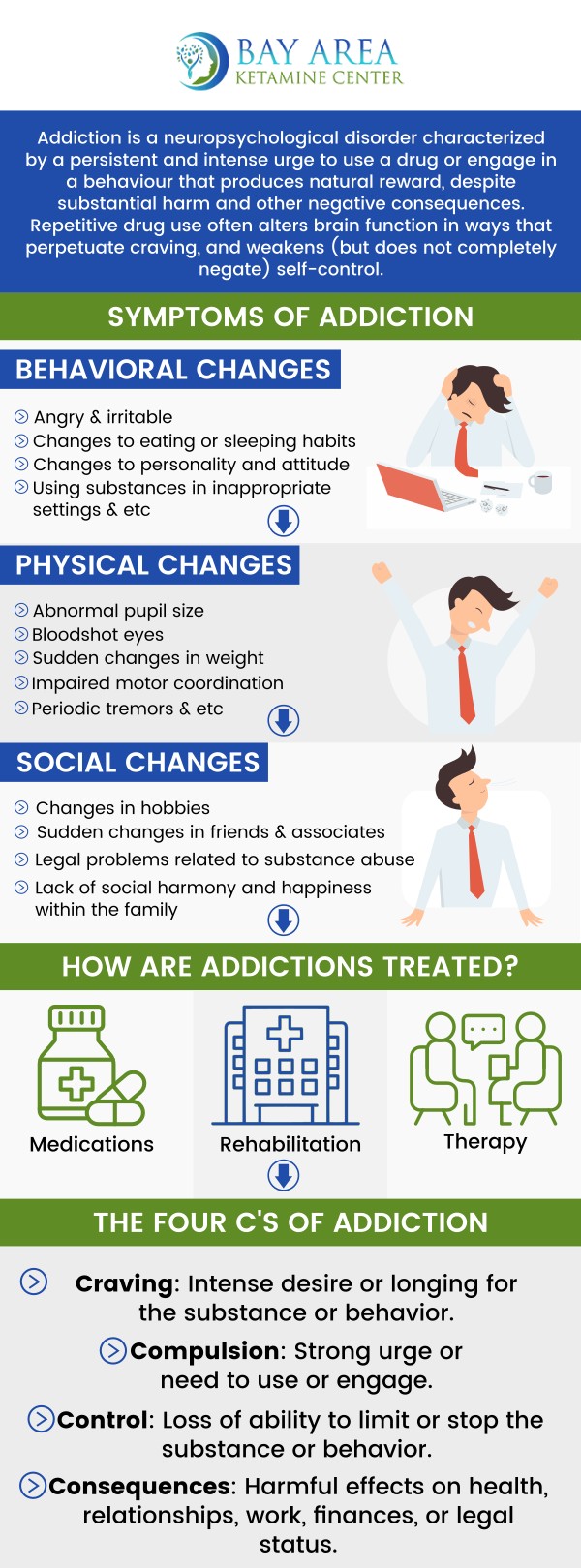
Table of Contents:
What is considered an addiction?
What are the different forms of addiction?
What are the causes of addiction?
Is ketamine a viable option for addiction treatment?
Why choose Dr. Paul Wender, MD, for addiction treatment at Bay Area Ketamine Center?
Addiction treatment can involve different approaches depending on a person’s health history, substance use patterns, and recovery needs. For individuals who have not experienced sufficient improvement with other options, IV ketamine therapy may be considered as part of a broader, medically supervised treatment plan. At Bay Area Ketamine Center, our clinical team evaluates each patient individually to determine whether IV ketamine therapy may be appropriate and discusses the potential benefits, limitations, and next steps based on their needs.
Addiction is a condition in which a person develops a strong, ongoing urge to use a substance or engage in a behavior despite harmful consequences. It is commonly associated with alcohol, drugs, nicotine, and gambling, but compulsive patterns can develop around other behaviors as well. A key sign of addiction is difficulty controlling or stopping the behavior, even when the person wants to cut back.
Addiction can begin to interfere with everyday responsibilities, relationships, work, school, finances, or personal well-being. People may continue the substance use or behavior despite recognizing the risks or negative effects it is causing. Because addiction can affect people differently, a professional evaluation can help determine the severity of the problem and identify appropriate treatment and support options.
Addiction can take different forms, most commonly involving substances or compulsive behaviors. Substance addictions may involve alcohol, nicotine, prescription medications, or illicit drugs and can lead to strong cravings, loss of control, tolerance, withdrawal, and continued use despite negative consequences. Behavioral addictions involve repeated activities that become difficult to control and begin interfering with daily life, relationships, work, or emotional well-being. Gambling disorder is a well-recognized example, while other compulsive behaviors may also require professional evaluation.
Impulse-control problems can sometimes resemble or occur alongside addictive behaviors, but they are not the same as addiction. These conditions involve difficulty resisting urges that may lead to harmful or disruptive actions. Addiction can also overlap with other mental health concerns, making a comprehensive assessment important for understanding the underlying pattern and determining the most appropriate treatment approach.
Addiction does not have a single cause. It usually develops through a combination of biological, psychological, social, and environmental factors. Genetics can influence a person’s vulnerability to substance use disorders, while family environment, peer influences, stress, trauma, and early exposure to alcohol or drugs may also increase risk. Mental health conditions such as depression, anxiety, post-traumatic stress disorder, and attention-related disorders can sometimes occur alongside substance misuse, particularly when substances are used to cope with difficult emotions or symptoms.
Age of first use can also play a role, as beginning substance use during adolescence may increase the likelihood of developing problematic patterns later. Limited family support, poor supervision, chronic stress, and easy access to addictive substances may further contribute to risk. The addictive potential of the substance itself is another important factor, since some substances can produce dependence more quickly than others. Not everyone exposed to these risk factors develops an addiction, which is why each person’s circumstances, health history, and patterns of use should be considered individually.
Ketamine is being studied as a potential treatment option for certain substance use disorders, including alcohol and other drug-related addictions. Research suggests that ketamine may influence brain pathways involved in mood, learning, cravings, and behavioral patterns, which could support recovery when combined with appropriate counseling and addiction treatment. However, ketamine is not considered a stand-alone cure for addiction, and its use for substance use disorders remains an evolving area of clinical research.
Whether ketamine therapy is appropriate depends on factors such as the type and severity of the addiction, medical history, mental health conditions, current substance use, and overall treatment goals. Because ketamine itself requires careful medical oversight, treatment should only be provided after a thorough evaluation and as part of a structured care plan. At Bay Area Ketamine Center, patients interested in IV ketamine therapy can speak with our clinical team to determine whether this approach may be appropriate for their individual needs.
Board-certified Dr. Paul Wender, MD, at Bay Area Ketamine Center, helps patients better understand addiction as a complex condition that can affect the brain, emotions, behavior, relationships, and overall quality of life. He takes a compassionate, physician-guided approach by listening to each patient’s history, challenges, symptoms, and treatment goals to help them feel heard and supported.
Dr. Wender focuses on personalized care rather than a one-size-fits-all approach. By helping patients understand how addiction may connect with anxiety, depression, trauma, or emotional distress, he provides thoughtful guidance and support for exploring appropriate treatment options. Patients benefit from a respectful care environment where education, safety, and emotional wellness are prioritized. Contact us today for more information or visit us to schedule an appointment online. Our clinic is conveniently located at 746 Altos Oaks Drive Suite B, Los Altos, CA 94024. We serve patients from Los Altos CA, Sunnyvale CA, Palo Alto CA, Atherton CA, Cupertino CA, Santa Clara CA, Mountain View CA, the Bay Area, and surrounding areas.

Check Out Our 5 Star Reviews




 Send Text
 How May I Help You?