

Where Can You Find PTSD Treatment in the Bay Area, CA?
If you are looking for PTSD treatment in the Bay Area, CA, ketamine therapy may be considered when symptoms such as anxiety, low mood, intrusive thoughts, or emotional distress have not improved enough with other approaches. At Bay Area Ketamine Center, Dr. Paul Wender, MD, provides physician-supervised ketamine therapy tailored to each patient’s medical history, symptoms, and treatment goals. Care includes careful evaluation and ongoing monitoring to determine whether ketamine therapy may be an appropriate part of a personalized PTSD treatment plan. For more information, contact us today or book an appointment online now! Our clinic is conveniently located at 746 Altos Oaks Drive Suite B, Los Altos, CA 94024.
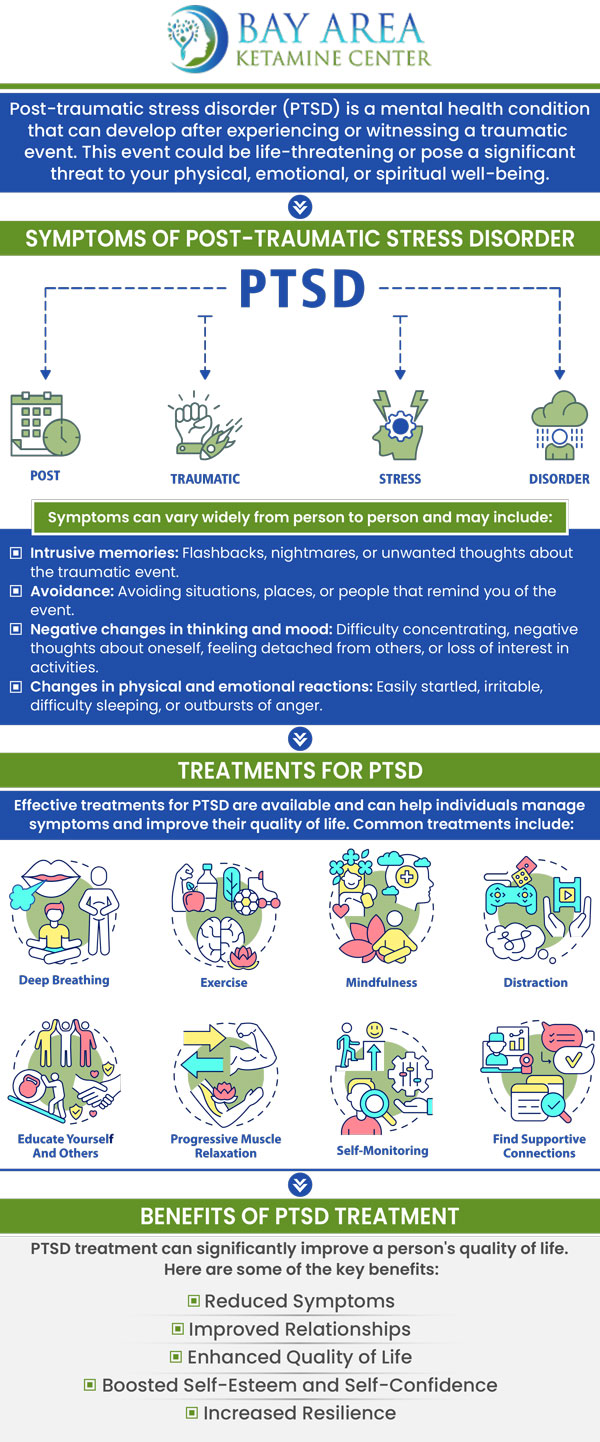
Table of Contents:
What is Post-Traumatic Stress Disorder (PTSD)?
What causes PTSD?
What does a PTSD episode look like?
How long do PTSD symptoms last?
How can I find a PTSD clinic in Bay Area, Los Altos CA?
Post-Traumatic Stress Disorder (PTSD) is a type of chronic mental health condition that affects individuals who have undergone traumatic events involving actual or perceived threats to life, injury, or serious harm. Such events can include physical or sexual assault, combat, disasters, serious accidents, or even witnessing extreme violence or death. This disorder is capable of occurring in people of any age and isn’t limited to those who’ve physically experienced the trauma.
PTSD affects the normal functioning of the brain, causing it to react excessively to stress or fear. PTSD is often accompanied by intense and disturbing thoughts or feelings about the traumatic occurrence that persist even long after the event has ended. Symptoms include intrusive recollections and nightmares, avoidance and numbing, hypervigilance and startle response, negative thoughts and feelings, and physical symptoms.
At Bay Area Ketamine Center, we understand the complexity of PTSD and offer innovative treatment options for individuals who have been diagnosed with this debilitating condition.
This condition is a result of the brain’s response to extreme traumatic events, which can involve potential death, severe injury, or sexual violation.
It’s important to understand that PTSD can be caused by direct exposure to trauma, such as experiencing a severe accident, being a victim of a form of assault, or even serving in a combat zone. Exposure to traumatic events such as these can lead to a heightened fear response, causing individuals to continually relive the traumatic event.
At the same time, PTSD can also develop from witnessing traumatic events, even if the individual is not directly involved. For instance, seeing a loved one being hurt or injured can lead to PTSD. First responders like firefighters and paramedics, who are frequently exposed to traumatic situations, are also at risk of developing PTSD.
PTSD is not fully understood, but it’s believed to result from a complex interplay of several factors, including psychological, biological, and environmental factors. Genetic factors are also capable of influencing the condition’s onset, as some people may have certain genetic predispositions heightening their susceptibility to developing PTSD.
At our center, we recognize the complexity of PTSD and the impact it can have on an individual’s life. Our team is well-versed in the complexities of this disorder, and we strive to provide our patients with treatment options that can help alleviate their symptoms.
Moreover, we understand that each individual’s experience with PTSD is unique, and therefore, we aim to provide personalized treatment plans that address each person’s specific needs.
This disorder, characterized by a person re-experiencing past traumatic events, can result in a range of physical, emotional, and behavioral symptoms.
Physical symptoms of PTSD can include a rapid heart rate, sweating and shaking as well as shortness of breath, or chest pain. Individuals may appear distant or unresponsive during an episode, and may even demonstrate aggressive behavior.
Emotionally, someone experiencing a PTSD episode may feel intense fear, anxiety, or panic. They may feel overwhelmed, detached, or emotionally numb. Flashbacks or intrusive memories of the traumatic event are also common emotional symptoms.
Behaviorally, PTSD can lead to avoidance of reminders of the trauma, excessive alertness, difficulty concentrating or sleeping, irritability, anger outbursts, or even substance use or self-harm.
These episodes can vary in duration and frequency from individual to individual and can be triggered by different factors for different people.
The duration and severity of PTSD symptoms can greatly vary among individuals. Some may experience symptoms for a few weeks or months, while others may have symptoms for years or decades. We recognize that several factors can influence the duration of PTSD symptoms, including the nature and severity of the trauma, the individual’s psychological history, their coping skills, and the availability of a support system.
We also acknowledge that PTSD can often cause significant problems in social and occupational areas, among others. For some individuals, the condition can become chronic and persist over many years.
However, we believe in the importance and effectiveness of timely, appropriate treatment in the course of PTSD. We offer a myriad of potential treatments for PTSD. Treatments are capable of aiding individuals in processing the traumatic event, developing coping mechanisms, and reducing symptom severity.
The Bay Area Ketamine Center utilizes a cutting-edge treatment known as Ketamine Infusion Therapy. This approach has shown remarkable results for individuals struggling with PTSD, even when other treatments have failed.
The team at the Bay Area Ketamine Center is composed of experienced professionals who understand the complexities of PTSD. The team is capable of providing the highest level of care and will tailor the treatment plan to your individual needs.
You can start your journey towards recovery by scheduling a consultation at the Bay Area Ketamine Center. During the consultation, the team will discuss your symptoms, the benefits and potential side effects of Ketamine Infusion Therapy. Visit us online for directions to our leading clinic and to learn more about our services. We also encourage everyone to visit us online to learn more about our special offers that will help you spend less and feel better!
Dr. Paul Wender, MD, provides individualized IV ketamine therapy for patients with PTSD based on their symptoms, medical history, previous treatments, current medications, and overall treatment goals. Because PTSD can affect mood, sleep, anxiety levels, concentration, and responses to traumatic memories in different ways, each patient is carefully evaluated before treatment begins. This personalized approach helps determine whether IV ketamine therapy may be appropriate and how it can fit into the patient’s broader mental health care plan.
At Bay Area Ketamine Center, Dr. Wender monitors each patient’s response throughout treatment and considers changes in symptoms such as intrusive thoughts, hypervigilance, emotional distress, sleep difficulties, and daily functioning. Treatment frequency and ongoing care can be adjusted according to individual response and clinical needs. The goal is to provide physician-guided ketamine therapy in a monitored setting while helping patients better understand their progress and next steps. For more information, contact us today or book an appointment online now! Our clinic is conveniently located at 746 Altos Oaks Drive Suite B, Los Altos, CA 94024. We serve patients from Los Altos CA, Sunnyvale CA, Palo Alto CA, Atherton CA, Cupertino CA, Santa Clara CA, Mountain View CA, the Bay Area, and surrounding areas.

Check Out Our 5 Star Reviews




 Send Text
 How May I Help You?