

What Effects Can You Expect From Ketamine Therapy?
Ketamine therapy may produce both short-term and therapeutic effects that can vary based on the individual, treatment approach, and reason for care. During or shortly after treatment, some patients may experience temporary changes in perception, relaxation, lightheadedness, or mild nausea. At Bay Area Ketamine Center, Dr. Paul Wender, MD, provides careful medical supervision and personalized guidance throughout treatment. Our team helps patients understand potential effects, monitors individual responses, and provides appropriate follow-up care to support a comfortable and well-informed treatment experience. Contact us today for more information or schedule an appointment online. We are conveniently located at 746 Altos Oaks Drive Suite B, Los Altos, CA 94024.
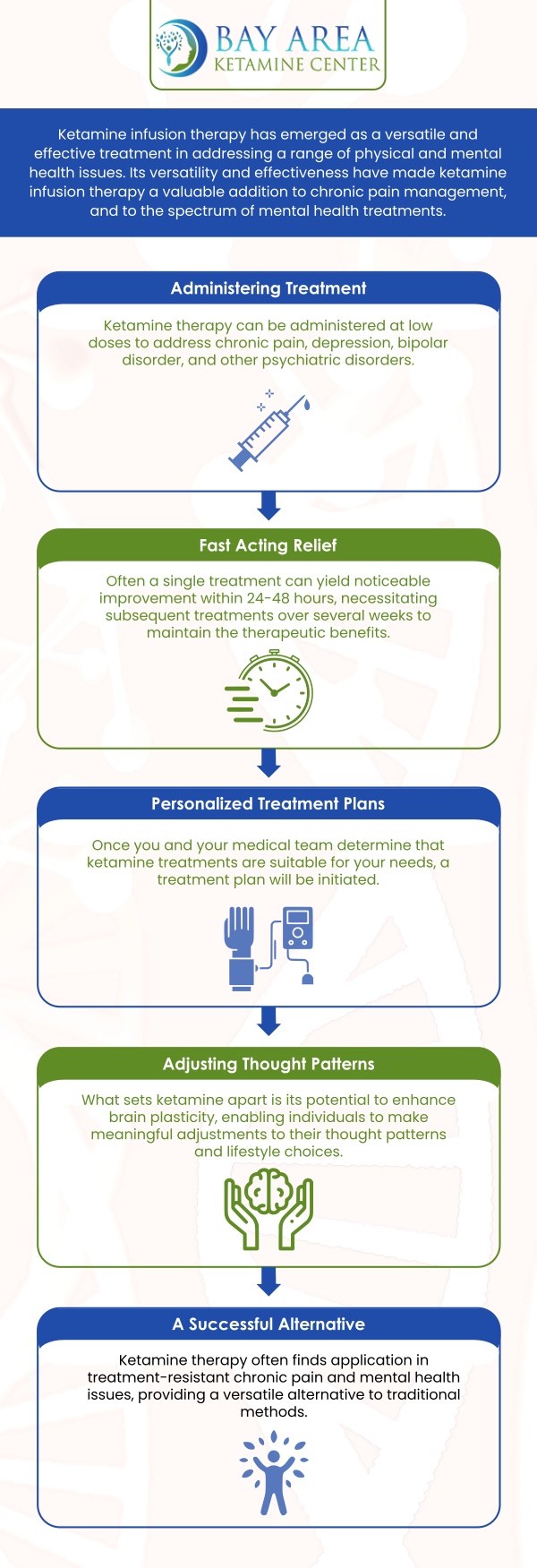
Table of Contents:
Does ketamine effectiveness vary from person to person?
What are the positive effects of ketamine on the body?
Is there any common risk associated with the treatment?
Can the intensity of IV ketamine effects vary even when treatment is well tolerated?
Can IV ketamine therapy temporarily change sensory awareness during a session?
How does board-certified Dr. Paul Wender, MD, guide patients through the effects of ketamine therapy in Los Altos, CA?
Ketamine is a medication that our clinic uses, as well as many other clinics, to help with disorders including post-traumatic stress disorder, bipolar disorder, major depression, suicidal ideation, and many more. It is an FDA-approved Schedule III non-narcotic; however, it has only been approved for specific uses.
If used as an off-label drug for its hallucinogenic properties for individuals to get a “high” off it, it can cause sedation, incapacitation, and even short-term memory loss.
If an individual gets ketamine and uses it without the medical management of a doctor, it can be used incorrectly and cause major damage, including:
• Instability of blood and heart vessel function
This can include a temporary increase in blood pressure and heart rate or even a decrease in blood pressure and heart rate. Due to this, abnormal heart rhythms may occur.
• Respiratory depression
Respiratory depression can also occur in overdose or if the rate of intake is rapid.
• Rise reactions
Reactions that can arise from incorrectly taking ketamine; if you do not meet the criteria, include confusion or agitation.
• Increase in intracranial pressure
Patients need to be closely monitored if they have increased intracranial pressure.
• Liver injury
Intake of ketamine may cause liver dysfunction.
• Thinking or cognitive deficits
There are research reports that it can cause effects on children.
The positive effects greatly outweigh anything else; there are many positive benefits of using ketamine infusion therapy for the body, including:
• Adaptability
Ketamine contributes by increasing glutamate transmission, which increases neuroplasticity and helps neurons communicate along new pathways. Due to this, ketamine can help the patient experience improved thought and mood patterns with these new connections.
• Psychological healing
Ketamine is known to help improve synaptic connections within the brain by activating the NMDA receptor pathway. This will begin to contribute to the antidepressant effects while priming the patient to experience a psychological healing process.
• Blocking any pain signals
Ketamine-infused therapy helps by blocking excessive pain signals and helps the patient’s body to reboot itself.
• Mental breakthroughs
Ketamine’s effects if done properly in a controlled medical setting, will contribute to a profound mental breakthrough as well as attitudinal shifts for each patient who is experiencing depression and other mood disorders.
• Minimal side effects
Ketamine-infused therapy has some of the most minor and short-term side effects when compared to antidepressant medication.
• Rapid improvements
Many patients begin to see subtle improvements in their mood by the day after the third ketamine infusion therapy session. The benefits from ketamine infusion therapy become more noticeable once the patient progresses through the therapy and completes a full cycle of infusion treatments.
• Lasting relief
The full series of ketamine infusion therapy allows symptoms to stay at bay for up to three to four months, and at times some patients see longer-lasting benefits. Considering the amount of effort and time that is required to complete the ketamine infusion treatment, it is one of the most highly effective and long-lasting therapies available.
The few common risks that are associated with ketamine infusion treatment if used over a long period of time include:
• Drug dependence
• Bladder damage
• Cognitive impairment
• Change in the patient’s personality
Yes. The intensity of IV ketamine effects can vary from one session to another even when treatment is well tolerated. Factors such as dose, body weight, sleep, stress, hydration, medications, and individual sensitivity may influence how strongly a patient notices sensations such as relaxation, altered perception, lightness, or dissociation during an infusion.
A stronger or milder experience does not necessarily indicate whether the treatment is working better or worse. The clinical team monitors vital signs, comfort, and overall response throughout the infusion and may adjust treatment when medically appropriate. Patients should report any changes or concerns so their IV ketamine therapy can remain individualized and carefully supervised.
IV ketamine therapy can temporarily affect sensory awareness during an infusion. Some patients may notice changes in how they perceive sounds, lights, space, time, or their surroundings. These effects are related to ketamine’s activity in the brain and generally occur while the medication is being administered or shortly afterward.
Sensory changes can differ in intensity from person to person and may also vary between treatment sessions. Patients are monitored throughout IV ketamine therapy to help maintain comfort and safety. These temporary effects typically lessen as the medication wears off, and patients should discuss any unusual, intense, or persistent symptoms with the clinical team.
Board-certified Dr. Paul Wender, MD, at Bay Area Ketamine Center serving the Bay Area and Los Altos, CA, helps patients understand the effects of ketamine therapy with clear education, careful evaluation, and individualized medical guidance. Before treatment begins, Dr. Wender reviews each patient’s health history, symptoms, prior treatments, current medications, and personal wellness goals. This allows him to explain what ketamine therapy may feel like during the session, what patients may notice afterward, and how the treatment may support their specific condition. His approach helps reduce uncertainty and gives patients a clearer understanding of what to expect throughout their care.
During ketamine therapy, Dr. Wender focuses on patient safety, comfort, and close monitoring in a supportive clinical setting. Some patients may experience temporary changes in perception, relaxation, emotional processing, or mild dissociation during treatment, which are carefully monitored by the medical team. After the session, Dr. Wender helps patients understand their response and how treatment may support relief from symptoms related to depression, bipolar disorder, PTSD, chronic pain, migraines, or other complex concerns. With his physician-led care, patients benefit from a personalized treatment plan, compassionate guidance, and ongoing support designed to help them feel informed, prepared, and confident while working toward better emotional wellness, symptom improvement, and overall quality of life.
If you are interested or want to learn more about Ketamine infusion therapy, contact Bay Area Ketamine Therapy. We are conveniently located at 746 Altos Oaks Drive Suite B, Los Altos, CA 94024. We serve patients from Los Altos CA, Sunnyvale CA, Palo Alto CA, Atherton CA, Cupertino CA, Santa Clara CA, Mountain View CA, the Bay Area, and surrounding areas.

Check Out Our 5 Star Reviews




 Send Text
 How May I Help You?